
Miami County Criminal Court Records
A criminal court record is the court file, not just the accusation. In Miami County, the record begins when a criminal case is opened and then grows as the court receives filings, schedules hearings, enters orders, records pleas, and issues a disposition or sentence. It may include count numbers, offense descriptions, statute references, level or class, plea, sentence terms, probation, jail credit, fines, costs, restitution, and bond-related entries when public.
Miami County has Circuit Court, Superior Court I, Superior Court II, and Peru City Court in the local court structure. Superior Court II expressly lists all non-driving misdemeanor charges and all non-driving Level 5 and 6 felony charges among its case allocation, along with juvenile matters and other divisions. Driving-related crimes, higher felony allocations, and city-level matters should be verified by case number, court name, citation, or local rules. The filed charge detail itself is covered more closely in Miami County arrest records and court charges.
Search Miami County Criminal Court Records
The primary public search route is Indiana MyCase. MyCase can show public criminal case information for Miami County courts using Odyssey. Search by case number when possible. If the case number is not known, use defendant name, narrow by Miami County, and check the court and case type before opening a result. A public criminal court record can show the chronological case summary and, in some matters, public online documents.
- Open MyCase and select a case, name, citation, or cross-reference search.
- Enter the defendant name or case number, then narrow to Miami County when available.
- Confirm the court, filed date, case type, parties, and case status in the header.
- Read the chronological case summary for charges, hearings, pleas, motions, disposition, and sentencing.
- Contact the Miami County Clerk of Courts if a public document or certified copy is not online.
MyCase is not the official court record. Indiana help pages say the official record must be obtained from the court maintaining the file, and some public documents or older cases may not be online. For Miami County, that fallback is the Clerk of Courts at the courthouse. The Indiana public records guidance also directs users to the local clerk when a case document is not available online.
Miami County Criminal Case Stages
A criminal case moves through a sequence of court events. The docket does not always use plain language, so the stage and the entry must be read together. A charge entry is only an accusation. A plea entry shows the defendant's response. A disposition or sentencing entry shows the outcome or punishment ordered by the court. A warrant or bond entry may be part of the case file, but custody status should be checked with the jail or state custody systems.
Case flow: Charges Filed › Arraignment › Pretrial / Motions › Plea or Trial › Disposition › Sentencing
| Stage | What Happens |
|---|---|
| Charges Filed | The prosecutor files counts or the court receives a citation or charging document. |
| Arraignment | The defendant is advised of the charge and enters an initial plea or response. |
| Pretrial / Motions | The parties file motions, set hearings, exchange issues, or address bond and discovery. |
| Plea or Trial | The case resolves by plea, dismissal, trial verdict, or another court-approved outcome. |
| Disposition | The court records the result for the case or each count. |
| Sentencing | The court orders jail, probation, fines, costs, restitution, or other terms after conviction. |
What Miami County Criminal Records Show
Criminal court records in Miami County are read by field and by event. The case header may tell where the matter was filed and whether it is open, closed, pending, or disposed. The docket then adds context. Final orders and judgments in criminal cases are among the public online documents MyCase says may be available, but not every underlying document appears online. When the record is needed for legal use, a clerk copy is the safer route.
| Field | What It Shows |
|---|---|
| Case Number | The Indiana criminal case identifier with county, court, year, case type, and sequence. |
| Defendant | The person charged, with public identifiers limited by access rules. |
| Court | Miami Circuit Court, Superior Court I, Superior Court II, Peru City Court, or appellate court. |
| Charges | Count number, offense description, statute, level or class, and current status when public. |
| Plea | Guilty, not guilty, or another recorded plea event. |
| Hearings | Dates, times, court, judge, hearing type, and continuance entries for public settings. |
| Disposition | Outcome such as guilty, dismissed, acquitted, closed, or another court-entered result. |
| Sentence | Jail, probation, fines, costs, restitution, jail credit, or other terms after conviction. |
The Public Defender screenshot assigned to this page is sourced from Miami County's Public Defender page.
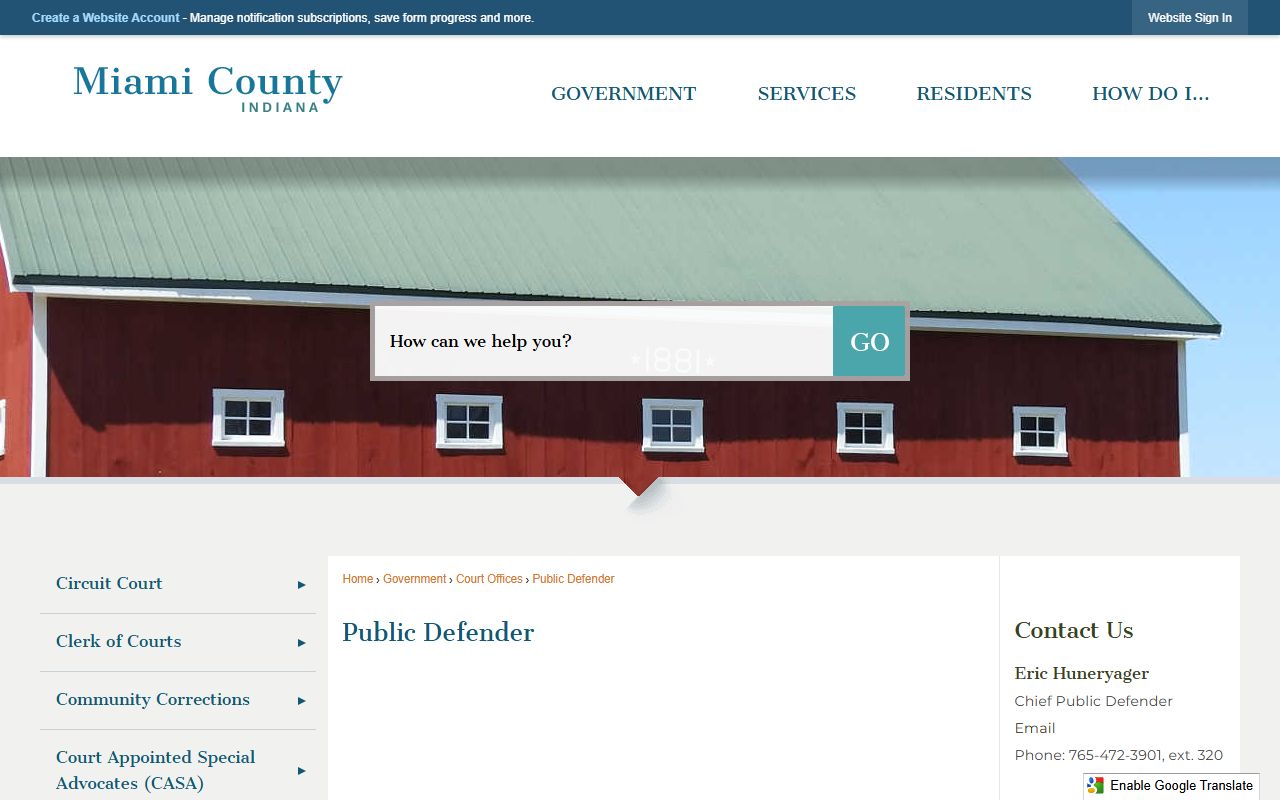
The Public Defender office is part of the criminal court ecosystem, but criminal case records and copies still route through the court record system and Clerk.
Miami County Charges vs Convictions
Being charged is not the same as being convicted. A Miami County criminal court record can show charges that were later dismissed, reduced, amended, or resolved by acquittal. The docket should be checked for disposition, plea, judgment, and sentencing entries before treating a charge as an outcome. One arrest can also produce several counts, and each count may resolve differently.
| Point | Charge | Conviction |
|---|---|---|
| Meaning | A formal accusation tied to a statute or ordinance. | A guilty plea, guilty finding, or judgment of conviction. |
| Record Stage | Appears near case opening or amendment. | Appears after plea, trial, or court judgment. |
| Proof | Based on the charging process. | Requires plea or proof beyond a reasonable doubt. |
| Outcome | May be pending, dismissed, amended, or reduced. | May lead to sentence, probation, fines, costs, or restitution. |
Miami County Dispositions and Sentences
Disposition tells what happened to the case or count. A docket may show dismissed, guilty, not guilty, judgment entered, closed, transferred, or another outcome. Sentence tells what the court ordered after a conviction. It can include jail, suspended time, probation, fines, costs, restitution, jail credit, or other terms. In some cases the sentence may be spread across several docket entries, so read the final judgment or sentencing order when available.
Bond and warrant entries require extra care. A bond entry may show financial conditions or release details, but custody should be checked with the Miami County Jail or statewide custody tools. A warrant entry on a public docket may show that a warrant was issued or recalled, but it should not be treated as a complete live warrant search. Public staff may be limited in what they can confirm if a warrant, juvenile matter, or investigation is restricted.
Sealed vs Expunged Criminal Records
Indiana criminal records can be restricted through sealing or expungement when the law and court order allow it. MyCase help says pending or denied expungement cases may remain visible, while granted expungements may remove or restrict public access depending on the statutory category. Miami County users should not assume that jail, arresting-agency, BMV, or federal records change automatically just because one court record is restricted.
| Point | Sealed | Expunged |
|---|---|---|
| Public Visibility | Excluded from ordinary public access by rule or order. | Removed or restricted from public access under the expungement order. |
| Legal Source | Court access rules, statute, or case-specific order. | IC 35-38-9 for eligible criminal records. |
| Who May See It | Limited users with authority, party status, or court permission. | Access depends on expungement type and statutory exceptions. |
| Practical Step | Ask the Clerk or court what proof or order is required. | File in the court that handled the case and give required notice to the prosecutor. |
Public Access to Criminal Records
Public access to Miami County criminal court records is governed by Indiana court-record rules, the Indiana Access to Public Records Act, and case-specific confidentiality laws. The general rule is access unless a record is excluded by rule, statute, or court order. Common limits include juvenile records under IC 31-39, sealed or expunged cases, mental-health material, protected-party information, Social Security numbers, financial accounts, medical records, and other private identifiers.
Key Statutes:
IC 5-14-3 is Indiana's general public-records law for inspection and copying unless an exemption applies.
Indiana Rules on Access to Court Records set the court-specific public and confidential record rules.
The U.S. District Court screenshot assigned to this page is sourced from the U.S. District Court for the Southern District of Indiana.
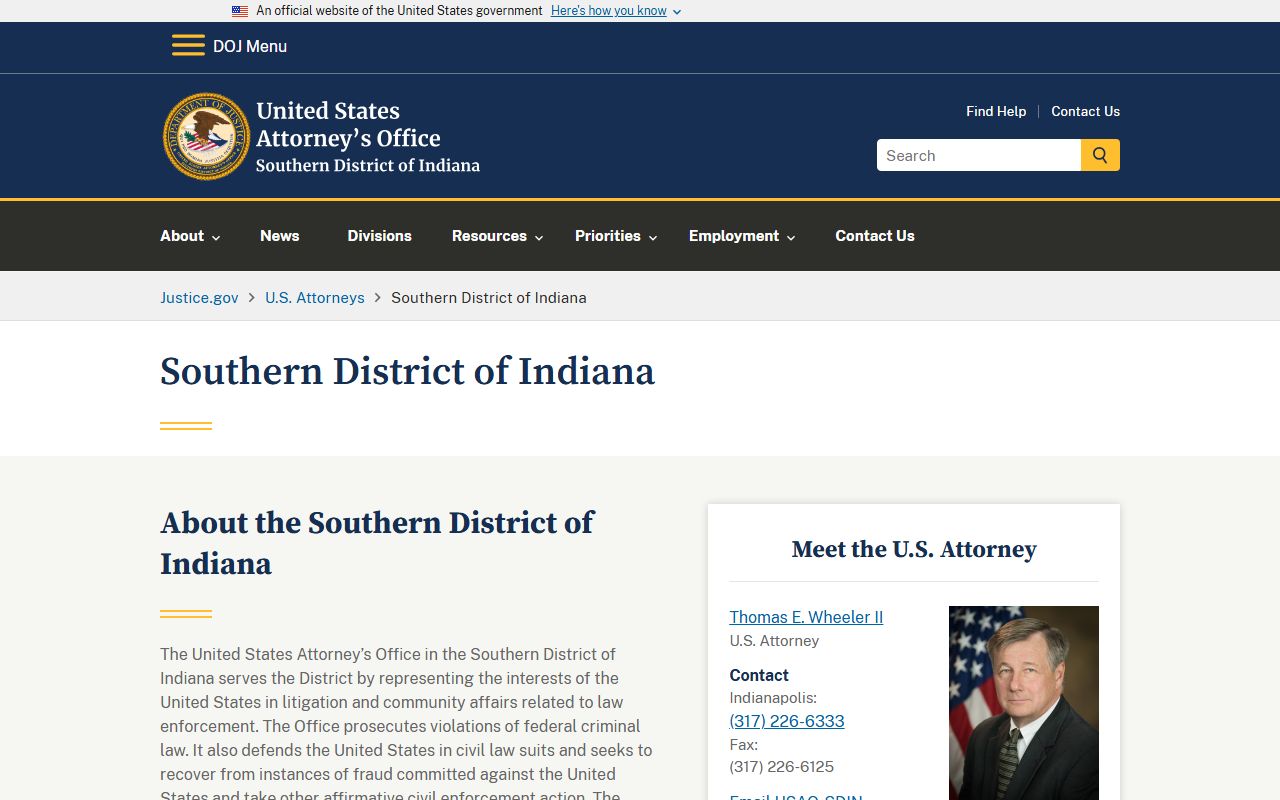
Federal criminal cases are separate from Miami County criminal court records and should be searched through federal court systems.
Federal Criminal Records Are Separate
A Miami County state criminal case belongs in Indiana trial court records. A federal indictment, federal supervised release case, federal habeas matter, or federal appeal belongs to the federal courts. Federal cases are not filed with the Miami County Clerk and are not official county case files in MyCase unless a related state matter also exists. PACER is the official federal case system, and Indiana federal appeals go to the Seventh Circuit.
The Seventh Circuit image assigned in the manifest is sourced from the U.S. Court of Appeals for the Seventh Circuit.
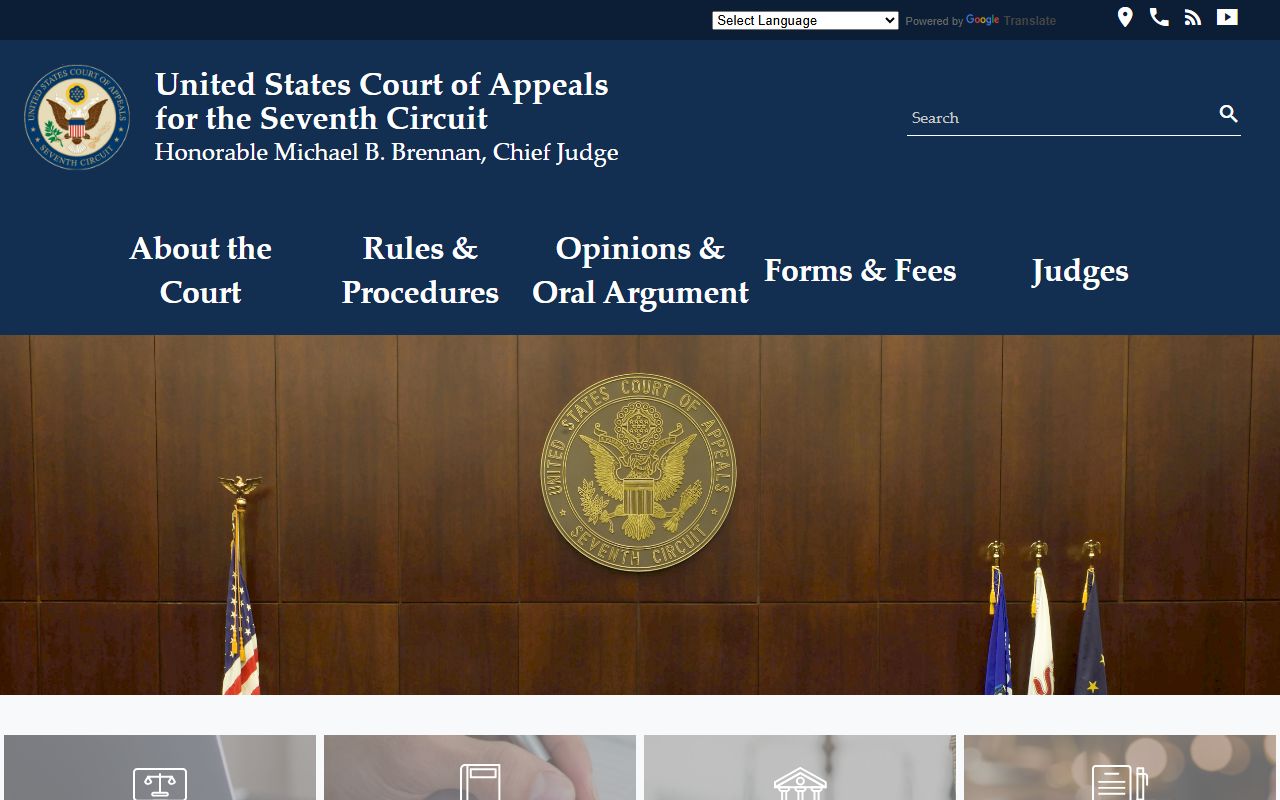
Use federal appellate sources only for federal appeal records, not for county trial-court charges or sentences.
The U.S. Attorney image assigned to this criminal records page is sourced from the U.S. Attorney's Office for the Southern District of Indiana.
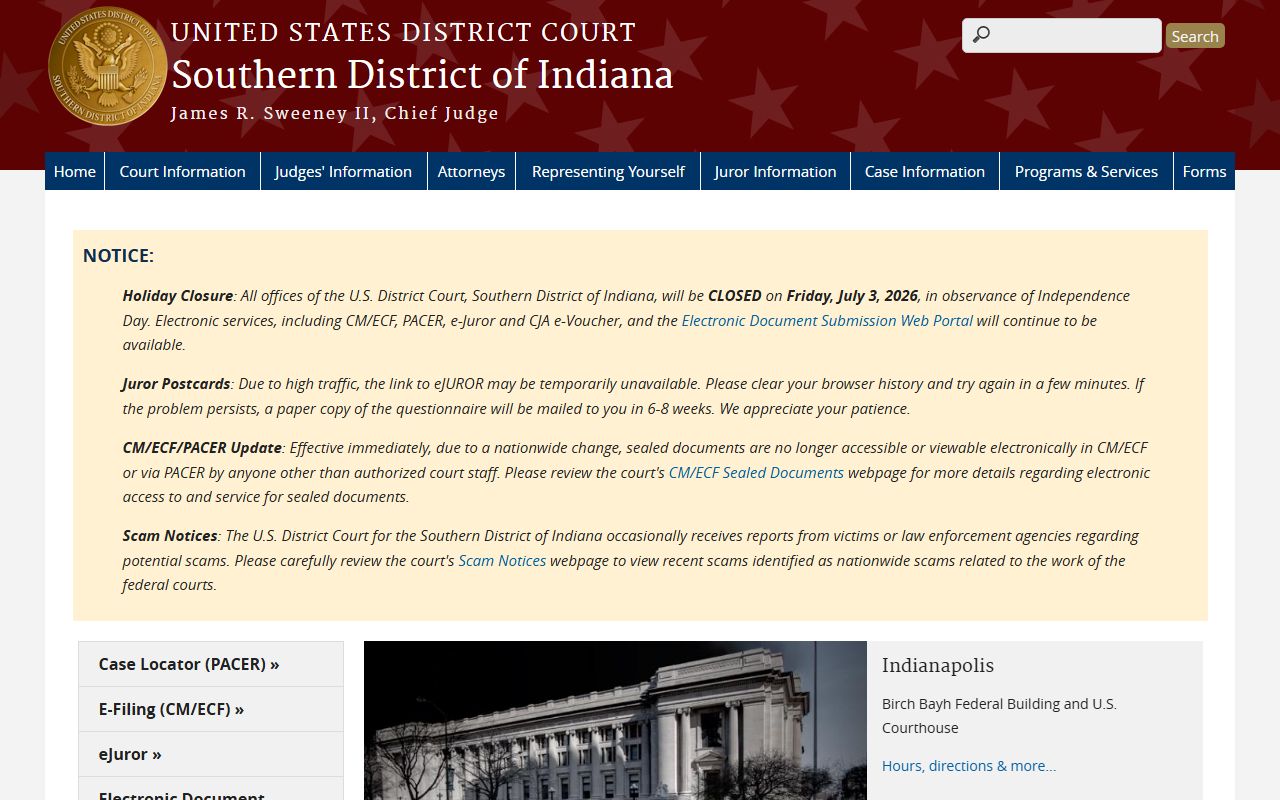
The U.S. Attorney handles federal prosecutions; Miami County Prosecutor handles local state criminal charges.
Restricted Miami County Criminal Records
Restricted criminal records include juvenile delinquency and status matters, sealed cases, expunged matters, records tied to protected people, mental-health material, and data that court rules exclude from public access. Superior Court II hears juvenile delinquency, juvenile status, and termination of parental rights matters, but those records are not ordinary public criminal files. If a public search does not show a case, the reason may be confidentiality, sealing, expungement, wrong court, wrong spelling, old converted data, or no filed case.
For a copy request, contact the Miami County Clerk of Courts with the case number and document requested. For defense-related questions, the Public Defender office is at 25 Court Street, Peru, IN 46970, phone 765-472-4802. For prosecution records or traffic/criminal division questions, the Miami County Prosecutor is at 25 N Broadway, Room 116, Peru, IN 46970. Clerk staff can provide record channels but cannot interpret charges, advise what to file, or give legal advice.
Important: Criminal court lookups are not consumer reports and should not be used for FCRA-regulated screening decisions.